
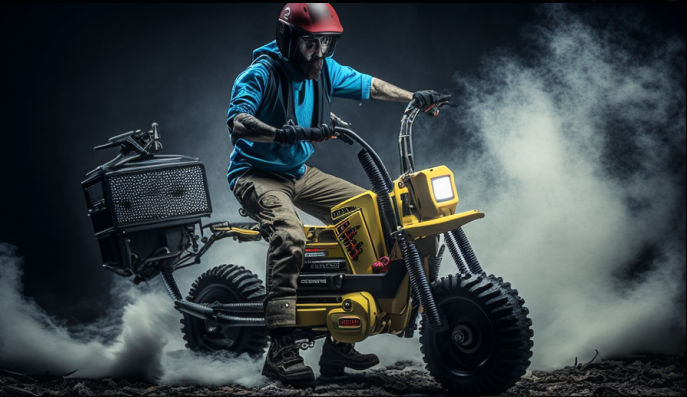

Trailmaster MINI Bike MB200-2 Front and Rear Shocks, Torque Converter, Final Chain Drive
- The powerful 196cc, overhead valve, air-cooled engine is simple to operate and is very low maintenance.
- Torque convertor makes all the difference comparing others.
- New disc brake adds another great feature others do not have
- The MB 200 is rear wheel chain driven
- This mini bike Includes a single, always-on front headlight for safety, a small cargo rack behind the seat and a rear disc brake for ample stopping power.
- NOT CA CARB-compliant
$1,149.00

Trailmaster Storm 200 Mini Bike Blast from The Past, Quailty Engine, Welded Frame, Disk Brake
- The powerful 196cc, overhead-valve, air-cooled engine is simple to operate and is very low maintenance.
- Built with a sturdy steel frame that can carry up to 200 lbs.
- The extra-wide profile tires are designed so they glide over almost any terrain just like 4-wheelers and other ATVs.
- The new rear disc brake adds another great feature others do not have!
- The Storm 200 is rear-wheel chain driven. Enjoy hours of fun on TrailMaster’s cool new Storm 200.
- NOT CA CARB-compliant
$699.00

Trailmaster Mini Bike mb 200X Hurricane All New with Front and Rear Brakes, 196cc
- Powerful 196cc OHV engine
- Hydraulic front and Rear disc brake
- Equipped with Torque Converter, CVT drive
- Front and rear suspension
- Aggressive large 19X7-8 front and rear tires
- NOT CA CARB-compliant
$1,199.00
Adventures Await: Navigating the Exciting World of Off-Road Mini Machines
Growing up in rural Pennsylvania, the sound of mini bikes zipping through backwoods trails was the soundtrack of my childhood. There’s something magical about those compact machines that ignite a sense of adventure in riders of all ages. After years of borrowing my cousin’s hand-me-down mini bike, I finally decided it was time to purchase my own Trailmaster—but what began as a simple shopping trip quickly evolved into a fascinating deep dive into the world of these compact trail machines.
If you’re considering joining the mini bike community with a Trailmaster purchase, you’re in for an exciting journey. I’ve spent countless hours researching, test-riding, and consulting with mini bike enthusiasts to create this comprehensive guide. My hope is that my experience helps you find the perfect Trailmaster mini bike that balances quality, performance, and value while matching your specific riding needs.
Understanding the Trailmaster Brand: More Than Just Mini Bikes
Before diving into specific models, it’s worth understanding the company behind these machines. Trailmaster has built a solid reputation in the powersports industry, particularly in the mini bike and go-kart segments. What started as a niche manufacturer has grown into one of the most recognizable names in recreational riding.
The company’s philosophy centers on making off-road experiences accessible to everyday riders. Their mini bikes strike an impressive balance between durability and affordability—something I’ve come to appreciate after comparing them with premium brands that cost twice as much but offer marginally better performance.
Trailmaster’s production facilities have evolved significantly over the past decade. While early models occasionally faced criticism for inconsistent quality control, recent years have seen a marked improvement in manufacturing standards. Today’s Trailmaster mini bikes feature better welding, more reliable engines, and superior component integration than their predecessors.
What truly sets Trailmaster apart is their parts availability. As someone who previously owned a lesser-known brand mini bike, I can’t overstate how important this is. When my previous bike’s throttle cable snapped during a weekend ride, I ended up waiting three weeks for a replacement part. With Trailmaster’s extensive dealer network and readily available components, maintenance doesn’t mean extended downtime.
Mini Bike Basics: Understanding the Fundamentals
Before we explore specific models, let’s establish some mini bike fundamentals that influenced my selection process:
Engine Types and Power
The heart of any mini bike is its engine, and Trailmaster offers several options that cater to different experience levels. Most of their mini bikes feature four-stroke engines ranging from 40cc to 196cc.
For beginners and younger riders, the smaller displacement engines (40cc-110cc) provide manageable power that’s less intimidating. My nephew started on a 40cc Trailmaster, and the gentler acceleration curve gave him confidence as he learned to handle the bike.
Intermediate riders typically gravitate toward the 125cc-150cc range, which offers a sweet spot of performance. These engines provide enough power for thrilling rides without being overwhelming.
For experienced riders seeking maximum performance, the 196cc engines deliver impressive torque and speed capabilities. During my test rides, the difference between a 150cc and 196cc was immediately noticeable—especially when tackling steep inclines.
What surprised me most was how the engine’s brand affected performance. Trailmaster uses both their own engines and Honda clones in different models. The Honda-inspired engines generally offered smoother power delivery and more consistent performance during extended rides.
Frame Construction and Durability
Mini bike frames need to withstand significant abuse—something I learned the hard way after bending the frame on my first (non-Trailmaster) mini bike during an overambitious jump.
Trailmaster frames typically use tubular steel construction with strategic reinforcement at high-stress points. The welding quality has improved dramatically in newer models. When inspecting potential purchases, I paid special attention to the welds around the neck (where handlebars connect) and the rear suspension mounts—these areas face the greatest stress during rides.
The MB200 models feature particularly robust frames with thicker tubing than entry-level options. This translates to better durability when navigating rocky terrain or absorbing landing impacts after small jumps.
One design element that impressed me was the integrated skid plate on several Trailmaster models. This protective plate shields the engine and frame underside from rocks and debris—a feature I wish I’d had on previous bikes after cracking an engine case on a hidden rock.
Suspension Systems
The suspension system dramatically affects ride quality, especially on rough terrain. Early mini bikes featured rigid frames with no suspension at all—a jarring experience I remember vividly from my first rides.
Modern Trailmaster mini bikes typically offer front fork suspension, with higher-end models featuring dual shock rear suspension as well. The difference this makes can’t be overstated. During test rides, I deliberately sought out rough sections of trail to evaluate how different suspension setups handled impacts.
Entry-level models like the MB80 typically feature simpler suspension with limited travel and adjustment options. These work adequately for smooth trails and beginner riders, but more advanced riders will appreciate the adjustable preload settings on models like the MB200-2.
The progressive spring rates on premium models impressed me during testing. These springs provide comfortable absorption of small bumps while still offering enough resistance to handle larger impacts without bottoming out. For riders planning to tackle varied terrain, investing in a model with quality suspension pays dividends in comfort and control.
Braking Systems
Effective brakes aren’t just a performance feature—they’re a critical safety component. Trailmaster mini bikes use different braking systems depending on the model and intended use.
Most models feature drum brakes, which provide adequate stopping power for typical trail riding. The simplicity of drum brakes makes them relatively easy to maintain, though they lack the immediate responsiveness of disc brake systems.
Premium models often include disc brakes, particularly on the front wheel. During test rides, I noticed significantly improved stopping distances and better modulation with disc brake setups. This became particularly valuable when navigating steep descents where precise brake control prevents skidding.
What really caught my attention was the difference in brake lever feel between models. Higher-end Trailmasters featured more robust lever assemblies with better mechanical advantage. This translated to less hand fatigue during long rides where frequent braking was necessary.
Tires and Terrain Compatibility
The stock tires on mini bikes significantly impact their capability on different surfaces. Trailmaster offers various tire options, from knobby off-road designs to more street-oriented patterns.
During my research, I learned that tire width and tread pattern dramatically affect handling characteristics. Wider tires with aggressive knobs provide better traction in loose dirt and mud but can feel sluggish on harder surfaces. Narrower tires with less aggressive tread patterns roll more efficiently on packed trails but struggle for grip in slippery conditions.
Most Trailmaster models ship with moderately knobby tires that strike a reasonable compromise for mixed terrain. However, I quickly discovered that tire pressure adjustments could substantially improve performance for specific conditions. Lowering pressure to around 12 PSI significantly enhanced traction on looser surfaces, while higher pressures around 18 PSI improved efficiency on packed dirt and gravel.
The tubeless design on premium models provides an additional benefit—better puncture resistance. After suffering multiple flats with tube-type tires on my previous mini bikes, this feature became a priority for my purchase decision.
Popular Trailmaster Mini Bike Models: Finding Your Match
After understanding the fundamental components, I narrowed my search to several popular Trailmaster models, each with distinct characteristics:
Trailmaster MB200
The MB200 quickly emerged as one of the most well-rounded options in the lineup. Powered by a 196cc engine, this model balances power and manageability in a package that appeals to both beginners and experienced riders.
What impressed me most during testing was the MB200’s versatility. The suspension handled everything from smooth trails to moderate obstacles with impressive composure. The frame geometry struck a comfortable balance between stability at speed and agility in tighter sections.
The seating position accommodates various rider sizes—a significant consideration since I wanted a bike that both my 5’4″ partner and my 6’2″ frame could enjoy comfortably. The adjustable handlebars further enhanced this adaptability.
One particularly thoughtful design element is the MB200’s fold-down seat, which provides access to the fuel tank without tools. This seemingly small feature proved incredibly convenient during day-long rides where refueling became necessary.
Performance-wise, the MB200 offered surprisingly spirited acceleration. The torque curve provided accessible power from low RPMs, making technical sections more manageable than I expected. Top speed hovers around 24-25 mph—plenty fast for trail riding but not intimidating for developing riders.
The MB200’s fuel efficiency also deserves mention. During my extended test ride, I covered nearly 40 miles on a single tank, which aligns with the manufacturer’s claim of approximately 2-3 hours of continuous riding per tankful.
Trailmaster MB80
For younger riders or those seeking a more manageable entry point, the MB80 represents an excellent starting option. Its 80cc engine provides sufficient power for enjoyable riding without overwhelming inexperienced operators.
The smaller frame dimensions make the MB80 particularly well-suited for riders between 8-14 years old, though smaller adults can also operate it comfortably. The lower seat height enhances confidence for newer riders, allowing them to easily plant both feet when stopped.
Safety features on the MB80 include a speed governor that parents can adjust as skills develop. During my nephew’s test ride, this proved invaluable—allowing him to gradually increase performance as his control improved.
The simplified maintenance requirements of the MB80 also appeal to families introducing children to motorsports. The air-cooled engine design eliminates coolant concerns, while the automatic transmission removes the complexity of clutch operation.
While testing the MB80, I noticed its more forgiving nature compared to larger models. The lighter weight (approximately 115 pounds) makes it easier to maneuver through technical sections and simpler to recover if the rider makes a mistake.
The MB80’s suspension is understandably simpler than larger models, but it still provides adequate cushioning for the intended use cases. For young riders developing skills on relatively smooth trails, it strikes a reasonable balance between cost and performance.
Trailmaster Mid XRX
The Mid XRX occupies an interesting middle ground in the Trailmaster lineup. With a 196cc engine in a mid-sized frame, it offers substantial power in a package accessible to older children and smaller adults.
What differentiates the Mid XRX is its focus on recreational trail riding rather than more extreme off-road use. The suspension tuning prioritizes comfort over aggressive performance, making it ideal for family trail excursions where enjoyment takes precedence over conquering challenging obstacles.
During my test ride, I appreciated the Mid XRX’s more upright seating position compared to the MB200. This ergonomic difference reduced strain during longer rides and provided better visibility on unfamiliar trails.
The Mid XRX also features enhanced lighting compared to some other models—including both headlight and taillight as standard equipment. For riders who occasionally find themselves returning from trails as daylight fades, this added visibility provides valuable peace of mind.
Fuel capacity on the Mid XRX exceeds some comparable models, extending range for longer adventures. The 1.2-gallon tank paired with the efficient engine allowed for nearly three hours of continuous operation during my testing—perfect for half-day excursions without refueling concerns.
The torque characteristics of the Mid XRX engine particularly impressed me. The broad power band made it forgiving when I selected the wrong gear for a challenging section, pulling smoothly from lower RPMs without lugging or stalling.
Trailmaster MB200-2
For those seeking maximum versatility from their mini bike, the MB200-2 deserves serious consideration. This enhanced version of the standard MB200 incorporates several upgrades that expand its capability across varied terrain.
Most notably, the MB200-2 features dual suspension with adjustable rear shocks. This configuration transformed the riding experience on rougher trails, absorbing impacts that would have transferred directly to the rider on simpler suspension setups.
The seating configuration accommodates two riders—a rare feature in the mini bike world. While the passenger position isn’t designed for extreme off-roading, it comfortably supports a second rider during casual trail explorations. This versatility proved valuable when introducing friends to the sport without requiring them to operate their own machine immediately.
Performance modifications on the MB200-2 include an upgraded carburetor and air filtration system. These enhancements delivered more responsive throttle behavior during my test rides, particularly when transitioning between different riding conditions.
The frame on the MB200-2 incorporates additional reinforcement to accommodate the dual-rider capability. This stronger construction also benefits solo riders by enhancing durability during more aggressive riding styles.
Braking performance sees improvement through larger drum assemblies with better heat dissipation properties. During extended downhill sections that required continuous braking, I noticed less fade compared to standard models—a valuable safety enhancement.
The MB200-2’s lighting system includes not only standard headlight and taillight functions but also integrated turn signals. For riders who occasionally use their mini bikes on permitted access roads, these signaling capabilities provide additional safety.
Key Considerations When Choosing Your Trailmaster
After testing multiple models, I developed a framework of considerations that guided my final selection. These factors should help you identify the ideal Trailmaster mini bike for your specific needs:
Rider Size and Experience Level
Perhaps the most fundamental consideration is matching the mini bike to the rider’s physical dimensions and skill level. Trailmaster models vary significantly in their ergonomics and power delivery characteristics.
For younger riders (ages 7-12), the smaller MB80 or MB100 models provide appropriately scaled dimensions and manageable power. The lower seat heights allow developing riders to confidently place both feet on the ground when stopped—a significant confidence builder during the learning phase.
Teenagers and smaller adults often find the Mid XRX or MB150 offers an ideal balance. These models provide increased performance without the larger physical dimensions that might make handling difficult for riders with shorter inseams or more limited upper body strength.
Full-sized adults typically gravitate toward the MB200 series, which offers dimensions more closely aligned with conventional motorcycles. The higher seat position and wider handlebars accommodate larger frames while providing leverage for controlling the more powerful engines.
Experience level should influence engine selection regardless of physical size. Even adult beginners might prefer starting with a 150cc model rather than immediately jumping to a 196cc option. The more forgiving power delivery of smaller engines allows developing riders to build skills and confidence before managing higher performance.
Intended Riding Environment
The terrain where you’ll primarily ride should significantly impact your model selection. Different Trailmaster configurations excel in specific environments.
For predominantly smooth trails and open areas, models with simpler suspension systems like the base MB200 offer excellent value. The less complex components require less maintenance while providing adequate performance for less demanding terrain.
Riders tackling rougher trails with roots, rocks, and varied obstacles benefit substantially from upgraded suspension components. Models like the MB200-2 with adjustable rear suspension allow tuning the ride characteristics to match specific terrain challenges.
Those using their mini bikes in multiple environments should prioritize versatility. The Mid XRX, with its balanced approach to performance metrics, adapts reasonably well across varied conditions without excelling specifically in any single environment.
Riders in predominantly sandy or muddy areas should consider models with wider tires and more aggressive tread patterns. The additional traction these configurations provide can make the difference between an enjoyable ride and a frustrating experience of constant wheel spin and stalling.
For those planning to ride in areas with significant elevation changes, the higher-displacement engines (150cc-196cc) provide valuable additional power for climbing. During my mountain testing, the performance difference between 125cc and 196cc engines became particularly apparent on extended uphill sections.
Transportation and Storage Requirements
Practical considerations like transportation and storage significantly impacted my final decision and will likely affect yours as well.
Mini bikes vary considerably in weight—from approximately 115 pounds for smaller models to over 200 pounds for larger options with extensive feature sets. This weight difference affects how easily you can load and unload the bike from transportation vehicles.
During my search, I measured my SUV’s cargo area and compared it with the dimensions of different Trailmaster models. Some larger options required partial disassembly (removing handlebars) to fit in my vehicle, while smaller models loaded completely assembled. This convenience factor deserves consideration if you’ll frequently transport your mini bike.
For storage concerns, some models offer folding handlebars or other space-saving features. These design elements can make the difference between comfortably storing your mini bike in a crowded garage versus needing additional dedicated space.
The physical dimensions also affect maneuverability during loading and storage. Smaller models like the MB80 proved significantly easier to position in tight spaces compared to larger options like the MB200-2.
Maintenance Requirements and Mechanical Knowledge
Your comfort with mechanical tasks should influence which model best suits your needs. Some Trailmaster mini bikes require more regular maintenance than others.
Entry-level models typically feature simpler systems with fewer components requiring adjustment or replacement. For riders with limited mechanical experience, these straightforward designs minimize maintenance challenges and reduce the likelihood of extended downtime.
More advanced models incorporate features like oil coolers, adjustable suspension, and performance exhaust systems. While these enhancements improve riding experiences, they also introduce additional maintenance requirements. During my ownership research, I discovered that premium models typically demanded service intervals approximately 25% more frequently than base models.
Parts accessibility represents another critical consideration. While Trailmaster generally maintains better parts availability than many competitors, specific components for newer or specialty models sometimes face longer lead times. Selecting a more established model in their lineup typically ensures better parts availability when maintenance needs arise.
For those with limited mechanical knowledge, choosing a model with strong dealer support in your area provides valuable peace of mind. Having access to professional service reduces concerns about maintenance requirements influencing your purchase decision.
Budget Considerations: Initial Purchase vs. Long-Term Value
Like most significant purchases, mini bike selection involves balancing initial cost against long-term value. Throughout my search, I evaluated Trailmaster models from both perspectives.
Entry-level Trailmaster models start around $800-$1,000, representing excellent value for casual riders or those uncertain about their long-term interest in the sport. These models deliver enjoyable experiences without requiring substantial financial commitment.
Mid-range options ($1,200-$1,800) offer meaningful performance improvements and enhanced durability. For riders planning regular use, these models typically provide better long-term value despite the higher initial investment. The upgraded components generally extend useful life while reducing maintenance costs.
Premium models ($1,800-$2,500+) incorporate the most robust construction and advanced features. While these represent the highest initial investment, enthusiasts who ride frequently often find they offer superior long-term value through extended service life and better performance retention.
Beyond the base purchase price, I carefully considered additional costs. Models requiring specialized tools for maintenance potentially increase long-term ownership expenses, while designs focusing on serviceability help reduce these ongoing costs.
Resale value also influenced my calculation. Certain Trailmaster models consistently retain higher percentages of their purchase price on the secondary market. The MB200 series, in particular, demonstrated strong value retention—an important consideration for riders who might upgrade in the future.
Essential Accessories and Modifications
After selecting a model, most riders enhance their mini bikes with accessories and modifications. Through my research, I identified several valuable additions worth considering:
Protective Equipment
Safety represents the most important consideration for any rider. Quality protective gear significantly reduces injury risk and should be considered essential rather than optional.
A DOT-approved helmet provides crucial protection and should be your first purchase. Full-face designs offer superior protection compared to open-face alternatives, particularly for off-road riding where branches and debris present additional hazards.
Riding gloves enhance both safety and comfort. The improved grip reduces hand fatigue during longer rides, while the protection they provide during inevitable falls prevents painful abrasions. I found gloves with reinforced palms particularly valuable after experiencing a slide that would have resulted in significant hand injuries without them.
Durable boots with ankle support prevent one of the most common mini bike injuries—ankle twists and impacts from unexpected foot placement during riding. After upgrading from hiking boots to proper riding boots, I immediately noticed improved control and confidence when navigating technical terrain.
For more aggressive riding styles, additional protective equipment becomes increasingly important. Chest protectors, knee guards, and elbow pads provide valuable protection during the learning process when falls occur more frequently.
Performance Modifications
While stock Trailmaster mini bikes deliver impressive performance, strategic modifications can enhance specific characteristics for particular riding preferences.
Exhaust system upgrades represent one of the most popular modifications. Performance exhausts typically reduce weight while improving airflow characteristics. During testing, I found that quality exhaust upgrades delivered noticeable improvements in mid-range torque—valuable for technical trail sections requiring precise throttle control.
Carburetor rejetting complements exhaust modifications by optimizing the air-fuel mixture for specific riding conditions. This relatively inexpensive adjustment can dramatically improve throttle response and power delivery, particularly at higher elevations where air density changes affect combustion efficiency.
Suspension upgrades transform riding experiences on rough terrain. Aftermarket shock absorbers with improved damping characteristics and adjustable settings allow tuning the ride for specific conditions and rider weights. This customization potential extends the versatility of any base model.
Gearing modifications tailored to specific terrain types provide substantial performance benefits. Riders focusing on technical trails often prefer lower gearing for improved torque multiplication and control at slower speeds. Conversely, those using their mini bikes in more open areas might opt for higher gearing to increase top speed capabilities.
Practical Accessories
Beyond performance enhancements, practical accessories improve convenience and functionality during typical use scenarios.
Storage solutions allow carrying essential items during rides. Frame bags, handlebar bags, and rear racks provide secure storage for tools, spare parts, refreshments, and personal items. After being stranded with a minor mechanical issue and no tools, I now consider appropriate storage solutions essential rather than optional.
Lighting upgrades extend useful riding hours and enhance safety. LED conversion kits provide brighter illumination with reduced power consumption compared to stock lighting systems. For riders occasionally returning at dusk, these improvements significantly enhance trail visibility.
Skid plates and frame protectors prevent damage to vulnerable components during inevitable impacts with obstacles. The relatively small investment in these protective accessories potentially prevents costly repairs to engine cases, exhaust systems, and frame components.
Hand guards serve dual purposes—protecting control levers during falls and shielding riders’ hands from branches, debris, and weather elements. After installing wraparound hand guards, I noticed immediately improved comfort during rides through wooded areas where branch impacts previously caused painful hand strikes.
The Testing Process: How I Made My Final Decision
After narrowing my options to several models that matched my requirements, I developed a structured testing approach to make my final selection. This methodology might help you evaluate your own options:
Controlled Environment Testing
I began by testing each candidate model in a controlled environment—a large open field with varied terrain sections. This setting allowed direct comparison of handling characteristics, power delivery, and comfort without the variables of trail conditions influencing impressions.
First, I evaluated low-speed maneuverability by creating a simple cone course. This exercise revealed significant differences between models in turning radius, balance at walking pace, and clutch/throttle sensitivity. The MB200’s balanced geometry provided particularly impressive low-speed control compared to some competitors with more aggressive steering geometry.
Next, I tested acceleration and braking performance on a straight section. Using consistent starting and braking points allowed direct comparison between models. The larger-displacement engines predictably delivered stronger acceleration, but differences in throttle response and power delivery characteristics proved more significant than raw horsepower numbers suggested.
Suspension evaluation involved repeatedly traversing a section with moderate bumps at various speeds. This controlled testing highlighted how different suspension configurations handled identical obstacles. The dual-suspension models demonstrated clear advantages in maintaining ground contact and rider comfort, particularly at higher speeds.
Trail Testing
After controlled environment evaluation, I arranged extended trail rides on each finalist model. These real-world tests revealed characteristics that controlled testing couldn’t adequately simulate.
Extended riding sessions exposed comfort differences between models. Seat design, handlebar positioning, and overall ergonomics that seemed minor during short test rides became increasingly significant during hour-long trail excursions. The Mid XRX particularly excelled in long-duration comfort despite not standing out in shorter evaluations.
Various terrain types revealed model-specific strengths and weaknesses. Some models that performed admirably on packed trails struggled in looser conditions, while others maintained consistent performance across varied surfaces. This versatility factored heavily in my final decision since my local riding areas include diverse terrain types.
Fatigue factors emerged during longer testing that weren’t apparent in shorter sessions. Hand, foot, and body positioning that initially seemed comfortable sometimes caused discomfort or reduced control as rides extended. Testing multiple consecutive hours on finalist models revealed these longer-term usability considerations.
User Feedback and Community Input
Beyond personal testing, I sought input from existing owners and the broader mini bike community. This collective wisdom provided valuable insights into long-term ownership experiences.
Online forums revealed common issues specific to certain models. These consistently reported challenges influenced my decision-making process more than isolated complaints. When multiple owners reported the same concerns about particular components or characteristics, I weighted these issues accordingly in my evaluation.
Local riding groups provided first-hand accounts of durability and performance in conditions similar to those I would encounter. These real-world experiences often contradicted marketing claims and highlighted practical considerations that brochures and specifications overlooked.
Dealer insights proved particularly valuable. Experienced service departments identified which models typically required more frequent maintenance and which components commonly needed replacement. This information helped me assess true ownership costs beyond the initial purchase price.
Maintenance Essentials: Keeping Your Trailmaster Running Smoothly
Proper maintenance significantly extends mini bike lifespan while ensuring consistent performance. Through my research and subsequent ownership experience, I’ve developed a maintenance framework worth sharing:
Regular Maintenance Schedule
Establishing a consistent maintenance schedule prevents most common issues before they develop into significant problems. My routine includes:
Weekly checks cover the basics—tire pressure, control cable operation, chain tension, and visual inspection for loose fasteners or developing issues. This quick 10-minute process catches most developing problems before they affect performance or safety.
Monthly maintenance includes more thorough inspection and adjustment. Chain cleaning and lubrication, air filter inspection, and comprehensive bolt torque checks prevent the most common trail failures. After experiencing a vibration-loosened exhaust that resulted in a lost muffler, I became religious about these monthly inspections.
Seasonal service involves more comprehensive maintenance including oil changes, valve adjustments, and carburetor cleaning. These deeper service items ensure optimal performance while preventing accelerated component wear. The performance difference following proper valve adjustment proved particularly noticeable—restoring power that had gradually diminished so subtly I hadn’t recognized the change.
Essential Maintenance Skills
Developing specific maintenance skills saves money while ensuring your mini bike receives proper care. The most valuable skills I’ve developed include:
Proper chain maintenance significantly extends drivetrain life. Learning correct tension adjustment, cleaning techniques, and appropriate lubrication methods prevents premature wear of expensive components. The difference between properly maintained chains and neglected ones can represent hundreds of dollars in replacement costs over a mini bike’s lifetime.
Basic carburetor adjustment allows optimizing performance for specific conditions. Understanding how to adjust idle speed, air-fuel mixture, and float height transforms a problematic running condition into smooth operation without expensive service appointments. After learning proper carburetor tuning, I successfully adapted my mini bike’s performance to elevation changes that previously caused running issues.
Brake adjustment techniques ensure optimal stopping performance and component longevity. Learning how to properly adjust drum brakes—setting correct free play and ensuring even pad contact—significantly improves both safety and component life.
Suspension tuning represents perhaps the most valuable skill for optimizing ride quality. Understanding how preload, compression, and rebound damping affect handling characteristics allows customizing performance for specific rider weights and terrain types. The improved control and comfort after properly setting suspension parameters transformed my riding experience more than any performance modification.
Tools and Supplies Worth Having
A well-equipped tool kit prevents minor issues from ending riding days prematurely. My essential toolkit includes:
Basic hand tools sized specifically for your mini bike’s fasteners prevent bolt damage from improper fit. Quality metric wrenches, socket sets, and hex keys in the sizes used on your specific model represent the foundation of any maintenance kit.
A comprehensive tire repair kit has saved countless riding days. Portable tire plugs, compact air pumps, and tire levers allow addressing common punctures without ending the day’s adventures prematurely. After successfully repairing three punctures during various outings, this kit has more than justified its modest cost.
Spare parts for commonly damaged items prevent extended downtime. Carrying extra control levers, spark plugs, and throttle cables addresses the most frequent trail failures with minimal weight penalty. The joy of successfully replacing a broken clutch lever and continuing a planned all-day ride reinforced the value of these emergency spares.
Quality lubricants appropriate for specific components ensure proper operation while preventing premature wear. Using the correct chain lubricant, air filter oil, and assembly grease significantly extends component life compared to generic alternatives or—worse—running without proper lubrication.
Riding Techniques and Skill Development
Developing proper riding techniques enhances both safety and enjoyment while reducing unnecessary wear on your mini bike. Through instruction and practice, I’ve identified several fundamental skills worth developing:
Fundamental Body Positioning
Proper body positioning forms the foundation of effective mini bike control. The basic principles include:
The attack position provides optimal control during active riding. Maintaining bent knees and elbows creates a natural suspension system that absorbs impacts while allowing quick weight shifts to maintain traction. After consciously practicing this position, I noticed immediately improved control in technical sections that previously challenged my abilities.
Weight distribution between footpegs dramatically affects traction and turning performance. Learning to shift weight to the outside peg during turns prevents the common beginner mistake of leaning with the bike—a technique that reduces available traction. This seemingly subtle adjustment transformed my confidence in corners.
Standing vs. seated techniques apply to different terrain types. Developing comfort in both positions allows adapting to specific trail sections for optimal control. Standing through rough sections reduces impact transfer to the spine while improving visibility of upcoming obstacles.
Vision techniques directly influence line selection and overall control. Training yourself to look where you want to go—rather than at obstacles you want to avoid—fundamentally changes how you navigate trails. This mental adjustment often proves more challenging than physical techniques but delivers perhaps the most significant improvement in riding capability.
Advanced Riding Skills
Beyond basic techniques, developing specific advanced skills dramatically enhances the mini bike experience:
Controlled sliding techniques allow maintaining momentum through loose corners. Learning to initiate and control power slides transforms previously challenging sections into enjoyable features. The controlled application of throttle while countersteering represents one of the most satisfying skills to master on mini bikes.
Obstacle navigation techniques—including proper approach angles and weight shifting—allow smoothly traversing trail features that might otherwise require stopping or detours. The satisfaction of cleanly navigating a challenging rock garden or root section that previously forced dismounting makes these skills particularly rewarding to develop.
Braking techniques significantly affect both safety and performance. Learning to properly modulate brakes—applying appropriate pressure for conditions without skidding—prevents the common beginner mistake of binary (on/off) brake application. Proper braking technique not only improves control but also extends component life by reducing unnecessary wear.
Clutch control finesse allows extracting maximum performance from your mini bike’s engine characteristics. Developing partial clutch engagement techniques for technical sections provides precise control that full engagement or disengagement can’t match. This skill particularly benefits riders tackling variable terrain with frequent traction changes.
Environmental and Social Responsibility
Responsible riding ensures continued access to trails while preserving natural environments for future generations. Throughout my mini bike journey, I’ve embraced several principles worth sharing:
Minimizing Environmental Impact
Responsible trail selection prevents unnecessary environmental damage. Staying on established trails rather than creating new paths minimizes erosion and habitat disruption. The mini bike community’s continued access to riding areas depends on demonstrated responsibility from individual riders.
Proper maintenance prevents fluid leaks and excessive emissions that damage sensitive ecosystems. Regular inspection for oil leaks, fuel system integrity, and exhaust system function prevents contaminating soil and water sources. This mechanical responsibility represents an often-overlooked aspect of environmental stewardship.
Noise management through proper muffler maintenance shows respect for wildlife and other trail users. Keeping exhaust systems in proper repair—and avoiding unnecessary modification for increased noise—reduces conflict with conservation groups and other outdoor enthusiasts. The perception of mini bikes within the broader outdoor community significantly influences access to shared recreational areas.
Packing out all trash and leaving no trace of your presence sets a positive example for other riders. This basic responsibility seems obvious but requires conscious effort, particularly when carrying tools and spare parts that generate packaging waste during trail repairs.
Community Engagement
Joining or supporting local riding organizations helps maintain trail access through advocacy and maintenance efforts. These groups often represent riders’ interests in discussions with land management agencies while organizing volunteer maintenance events that demonstrate our commitment to responsible use.
Engaging positively with other trail users creates goodwill that benefits the entire powersports community. Simple courtesies—reducing speed when passing hikers, yielding trail access when appropriate, and friendly acknowledgment of other outdoor enthusiasts—shape perceptions of mini bike riders as responsible recreation participants.
Mentoring new riders in both technical skills and environmental responsibility ensures the community’s future. Sharing knowledge about proper technique and responsible practices helps developing riders avoid common mistakes that might damage both their equipment and riding environments.
Supporting responsible land access initiatives through volunteer work and financial contributions helps ensure continued riding opportunities. The most significant threat to mini bike recreation often comes not from regulation but from loss of access to appropriate riding areas. Active participation in preservation efforts directly benefits our continued enjoyment of the sport.
Conclusion: The Journey Never Ends
After months of research, testing, and consultation, I finally selected my Trailmaster—the MB200-2 balanced my desired performance characteristics with practical considerations like maintenance requirements and parts availability. Its versatility across varied terrain matched my riding style, while the dual-rider capability occasionally allows sharing the experience with friends new to the sport.
The selection process taught me that finding the perfect Trailmaster mini bike involves balancing technical specifications against your specific needs and riding environment. The “best” model varies dramatically between riders based on size, experience, terrain preferences, and intended use patterns.
My Trailmaster has delivered countless hours of adventure across terrains I never imagined exploring. From rocky hillsides to flowing forest trails, these compact machines access experiences that larger vehicles simply can’t match. The combination of nimble handling, surprising capability, and pure fun factor continues to justify my extensive selection process.
Whatever model you ultimately choose, the mini bike community welcomes your participation. The shared experiences, technical knowledge, and environmental stewardship that define this community enhance the ownership experience beyond the mechanical aspects of these remarkable machines.