
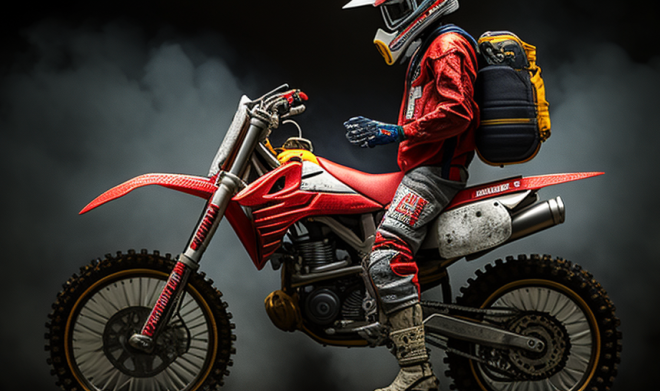

Trailmaster TM C50 mid Size Dirt Bike with High-Performance 145cc 4 Stroke 9.1HP Engine and Electric & Kick Start. (Orange)
- High performance 145cc 4 stroke 9.1hp engine
- Both Kick and Electric Start
- N-1-2-3-4, Four-Gear Manual Shift
- 49.8″ Wheel Base, 33.5″ Seat Height
- 17″ Front / 14″ Rear Cordial Tire
$1,499.00

Trailmaster TM15 Dirt Bike 110cc Semi Automatic 4 Speed, 24.21 inches seat Height, Disk Brakes, Twin Spar Frame
- 110cc engine
- Electric start and Kick start
- 4 gears semi auto
- 40 “ wheel base and 24.41” seat high
- Front tire 12”/Rear Tire 10”
- NOT CA CARB-compliant
$949.00

Trailmaster TM11 Dirt Bike 110cc Automatic Great Kids Bike, high Performance 110cc 4 Stroke 6 hp Engine, 24″ inch seat 10 inch Rims (Multiple Color Options) (Orange)
- high performance 110cc 4 stroke 6 hp engine
- front and rear disc brakes
- fully Automatic transmission with one gear
- heavy duty frame built for durability
- Wheel Base 39.37″, Seat Height 24.41″
$819.00
Navigating the Wild World of Off-Road Machines: A Personal Tale of Trial, Error, and Ultimate Triumph
When I first decided to buy a Trailmaster dirt bike, I had no idea what I was getting myself into. The seemingly straightforward question of “which bike should I get?” quickly spiraled into a rabbit hole of engine sizes, suspension types, and maintenance schedules that left my head spinning faster than a rear wheel in loose sand. After months of research, dozens of test rides, and one particularly memorable face-plant into a mud puddle (more on that later), I’ve compiled everything I wish someone had told me before I started this journey.
This isn’t just another generic buying guide pulled from manufacturer specs. This is my story—complete with the bruises, the breakthroughs, and that distinctive two-stroke smell that now permanently lingers in my garage—and hopefully, it will help you avoid some of the pitfalls I encountered along the way.
The Awakening: Why I Chose Trailmaster
Let me take you back to where it all began. I was standing at my office window, watching raindrops race each other down the glass while my computer hummed with spreadsheets I couldn’t bring myself to care about. That’s when my phone buzzed—a video from my cousin tearing through forest trails on his dirt bike, roosting corners and catching air with what looked like effortless joy.
Something clicked in me that day. I needed that freedom, that rush, that connection with the outdoors that had slowly leaked out of my life. By lunchtime, I was researching dirt bikes. By dinner, I had narrowed my focus to Trailmaster.
Why Trailmaster? In a market dominated by the Japanese big four and European premium brands, Trailmaster carved out its niche by offering accessible entry points into the off-road world. The value-to-performance ratio of Trailmaster dirt bikes makes them ideal for beginners and budget-conscious riders who still want reliable machines capable of serious fun. Their Chinese manufacturing keeps costs down, while their adoption of proven design elements creates a familiar experience for those transitioning from other brands.
My research indicated that while they might not have the racing pedigree of KTM or the legendary reliability of Honda, they occupied a sweet spot where affordability meets genuine capability. For someone like me—eager but inexperienced, enthusiastic but economical—it seemed perfect.
Understanding Your Riding DNA: The Foundation of Your Choice
Before diving into specific models, I needed to understand myself as a rider—even though I wasn’t one yet. This introspection proved crucial and saved me from making an expensive mistake.
Ask yourself these essential questions:
First, be brutally honest about your skill level. As a complete beginner, I initially lusted after the biggest, most powerful bike in the lineup. My ego whispered that I’d “grow into it.” Thankfully, wiser voices prevailed. Starting on a bike that matches your current ability—not your imagined future skills—is fundamental to both safety and enjoyment.
Second, where will you ride? The trails near my home are mostly tight woodland single-tracks with the occasional open field. This terrain profile demands different characteristics than, say, desert riding or motocross tracks. Understanding your primary riding environment helps narrow down the appropriate bike type.
Third, consider your physical build. I’m 5’10” and reasonably athletic, which opened up most mid-sized options. However, if you’re particularly tall, short, or heavy, this will significantly impact which models will fit you comfortably.
Finally, be realistic about your mechanical aptitude and willingness to learn. All dirt bikes require maintenance—it’s part of the culture—but some demand more attention than others. My mechanical experience was limited to changing car oil and the occasional flat tire repair. This factored heavily into my final decision.
The Trailmaster Lineup: Decoding the Options
When I first looked at Trailmaster’s website, the model designations seemed like alphabet soup. MB, MID, TRX—what did it all mean? After some digging, I found that Trailmaster’s dirt bike lineup generally falls into three main categories:
Youth Models (50cc-125cc)
The smallest Trailmasters are designed for young riders, with the MB50 and MB110 being popular choices. The MB50 features an automatic transmission, making it ideal for first-time riders as young as 4 or 5 years old. The semi-automatic MB110 offers a bit more growth room while still being manageable for kids.
Even though I was shopping for myself, I spent time looking at these because understanding the entire lineup gave me better perspective. Plus, my nephew was showing interest, and I was already planning to corrupt the next generation with my newfound passion.
Mid-Size Models (125cc-150cc)
Here’s where my personal journey really began. The Trailmaster TRX125 and MID XRS were the models that caught my eye initially. The TRX125 features a 4-stroke engine with a manual clutch and four-speed transmission—perfect for building fundamental riding skills. The MID XRS steps up to a 150cc engine with more power while maintaining a manageable frame size.
For adult beginners or smaller riders, these mid-size options provide enough power to have fun without being overwhelming. When I test rode the TRX125, it felt immediately approachable. I could concentrate on learning technique instead of just trying to control a beast.
Full-Size Models (200cc-250cc)
The Trailmaster 200E and 250 Pro represent the top end of the lineup, designed for experienced riders or larger adults who need the extra power and frame size. The 250 Pro, with its liquid-cooled engine and advanced suspension, is essentially competition-ready out of the box.
I’ll admit I was tempted by these larger models. There’s something about knowing you have untapped power in reserve that’s appealing. However, after an honest assessment of my skills (or lack thereof), I recognized that starting on one of these would be learning to swim in the deep end—possible, but unnecessarily challenging and potentially dangerous.
The Heart of the Machine: Engine Considerations
After narrowing down size categories based on my fit and experience level, it was time to understand the heart of these machines: their engines. This is where things got technical, but also fascinating.
Two-Stroke vs. Four-Stroke: The Eternal Debate
Trailmaster offers both engine types, and the difference matters significantly. Two-stroke engines deliver more power for their size, require simpler maintenance in some ways, and have that distinctive high-pitched whine that many riders (including me, now) find intoxicating. However, they typically demand more frequent maintenance and can be less forgiving for beginners due to their peakier power delivery.
Four-stroke engines generally provide smoother, more predictable power, better fuel efficiency, and can be less maintenance-intensive in certain aspects. The trade-off is additional weight and complexity when deeper maintenance is required.
For beginners, I generally recommend starting with a four-stroke. The power delivery is more forgiving, allowing you to focus on developing your skills rather than managing an explosive powerband. That said, if you have good throttle control and don’t mind more frequent maintenance, a small two-stroke can be an exhilarating introduction to the sport.
Air-Cooled vs. Liquid-Cooled
Most entry-level Trailmaster models use air-cooled engines, which have fewer components to maintain but may run hotter in demanding conditions. Their higher-end bikes feature liquid cooling, which adds complexity but provides more consistent performance, especially during extended riding sessions or in hot weather.
For my woodland trail riding with natural breaks and moderate temperatures, an air-cooled engine proved perfectly adequate. If you’re planning on aggressive riding or live in a particularly hot climate, the additional investment in liquid cooling might be worthwhile.
Displacement: Finding Your Sweet Spot
Engine size, measured in cubic centimeters (cc), directly affects power output. For adult beginners, I found the 125cc-150cc range to hit the sweet spot—enough power to handle diverse terrain but not so much that the bike becomes unmanageable.
After test riding several options, I settled on the TRX125 with its four-stroke engine. It offered a forgiving power delivery that built my confidence, while still having enough grunt to handle hills and the occasional open stretch where I could open the throttle.
The Unsung Hero: Suspension Quality
If engines are the heart of dirt bikes, suspension systems are the spine. Unfortunately, this critical component is often overlooked by beginners (myself included, initially) who focus solely on engine specs.
Front Suspension: Fork Types and Travel
Entry-level Trailmaster models typically feature conventional hydraulic forks, while higher-end models use inverted forks that offer better performance and adjustability. The TRX125 I chose comes with conventional forks offering about 7 inches of travel—sufficient for trail riding and small jumps, but certainly not motocross-grade.
More important than the type of fork is the quality of its construction and damping. Budget bikes sometimes sacrifice here, using lower-grade components that don’t absorb impacts as effectively. I found that Trailmaster strikes a reasonable balance, though their higher-end models naturally offer better components.
Rear Suspension: The Shock Truth
The rear shock absorber works alongside the swingarm to control rear wheel movement. Again, more expensive models offer better adjustability, allowing you to fine-tune the ride for your weight and riding style.
One enlightening moment came when an experienced friend adjusted my rear shock preload to match my weight. The difference was immediate and dramatic—suddenly the bike felt planted and predictable instead of bouncy and nervous. Don’t underestimate the importance of proper suspension setup!
The Connection Point: Ergonomics and Controls
A dirt bike can have the perfect engine and suspension, but if it doesn’t fit your body, the experience will be uncomfortable at best and dangerous at worst. Here’s what I learned about finding the right fit:
Seat Height: The Foundation of Comfort
For beginners especially, being able to touch the ground confidently is crucial for building comfort. The TRX125’s seat height of around 31 inches allowed me to place both feet firmly on the ground when stopped—a seemingly small thing that dramatically increased my confidence during those first few rides.
If you’re shorter, look at the smaller Trailmaster models or consider aftermarket lowering links. Conversely, taller riders might find the full-size models more comfortable for extended periods.
Handlebar Position and Controls
Trailmaster uses a fairly standard control layout across their lineup, which is helpful if you’re transitioning between models. The clutch, brake levers, and throttle should be easily accessible without stretching.
I discovered that minor adjustments make major differences. Rotating the handlebars slightly and adjusting lever positions to match my natural wrist angle eliminated the hand cramping I experienced on my first few rides.
Footpegs and Brake Pedals
Proper foot position is critical for control, especially when standing up for obstacles or jumps. The relationship between the footpegs, brake pedal, and shift lever creates what riders call the “triangle of control.”
I found Trailmaster’s stock setup reasonable, though I eventually invested in slightly wider aftermarket footpegs for better stability. The extra $40 transformed my riding comfort, proving that sometimes small upgrades yield outsized returns.
The Practical Side: Maintenance Realities
When I was shopping, I focused almost exclusively on the riding experience. What I didn’t fully appreciate was how much of dirt bike ownership involves maintaining the machine. This aspect deserves serious consideration when choosing your Trailmaster.
Regular Maintenance Requirements
All dirt bikes require regular attention: air filter cleaning, oil changes, chain adjustments, and general inspections. For Trailmaster specifically, I found their maintenance intervals to be similar to other brands, though some components might need more frequent attention due to material quality differences.
The TRX125’s four-stroke engine requires oil changes every 15-20 hours of ride time, air filter cleaning after every dusty ride, and valve adjustments every 60-80 hours. This might sound intensive compared to street vehicle maintenance, but it’s actually quite standard for off-road machines.
Parts Availability and Compatibility
One significant consideration with Trailmaster is parts availability. While they’ve expanded their dealer network, you won’t find Trailmaster parts at every motorcycle shop the way you might for Japanese brands.
I solved this by ordering a strategic selection of commonly needed parts—air filters, oil filters, spark plugs, levers, and cables—to keep on hand. Most are reasonably priced, and having them ready has saved multiple riding weekends from being canceled due to minor mechanical issues.
DIY-Friendly Design
On the positive side, I found Trailmaster bikes to be surprisingly DIY-friendly. Their simpler construction and generally accessible components make basic maintenance less intimidating than on some more complex machines.
YouTube has become my mechanical mentor, with numerous channels dedicated to maintaining Chinese-manufactured dirt bikes. The skills I’ve developed maintaining my Trailmaster have not only saved money but given me a deeper connection to the machine—there’s something satisfying about fixing problems yourself.
The Financial Picture: Total Cost of Ownership
The sticker price is just the beginning when it comes to dirt bike ownership. Here’s the financial reality I discovered:
Initial Purchase Price
Trailmaster’s primary appeal is their affordability. New models range from approximately $800 for youth bikes to around $2,500 for their premium 250cc offerings. This represents significant savings compared to Japanese and European brands, where comparable models often start at $4,000-$8,000.
I purchased my TRX125 for $1,299, which felt like an excellent value for a full-sized, trail-capable machine with a reliable four-stroke engine.
Essential Gear Investment
What many new riders (myself included) don’t initially factor in is the cost of proper gear. At minimum, you’ll need:
- A quality helmet ($150-$500)
- Riding boots ($100-$400)
- Gloves ($30-$100)
- Goggles ($30-$100)
- Protective jersey and pants ($100-$300)
- Body armor/chest protector ($80-$200)
I started with mid-range gear totaling about $600, which offered good protection without breaking the bank. Remember: proper safety gear isn’t an accessory—it’s an essential investment that can literally save your skin, bones, and life when you inevitably take a spill.
Transportation and Storage
Unless you’re fortunate enough to have riding areas directly accessible from your home, you’ll need transportation for your bike. Options range from hitch-mounted carriers ($100-$300) to small trailers ($800-$2,000) or truck bed setups.
I started with a hitch carrier for my SUV, which worked well enough for local trips. As my addiction—I mean hobby—grew, I eventually invested in a small utility trailer that could carry two bikes for when friends wanted to join.
Storage considerations matter too. Dirt bikes don’t like being left outdoors exposed to the elements. I cleared space in my garage, but if that’s not an option, a quality motorcycle cover or small storage shed might be necessary.
The Upgrade Cycle
Perhaps the most insidious cost is what I call the “upgrade cycle.” Once you start riding, you’ll inevitably identify components you want to improve. For me, it began with footpegs, then progressed to a better handlebar, eventually leading to suspension upgrades.
While Trailmaster bikes perform admirably in stock form, budgeting for strategic upgrades will enhance your experience significantly. I recommend setting aside roughly 20-30% of your initial bike cost for future improvements.
Making the Purchase: Where and How
With my research complete and budget established, it was time to actually buy the bike. This process revealed several important considerations:
Dealer vs. Online Purchase
Trailmaster sells through both physical dealerships and online retailers. Each has advantages:
Dealers offer the opportunity to see and sit on bikes before purchasing, often provide assembly and initial setup, and may offer service packages. They typically charge full MSRP but provide peace of mind and potential relationship building for future service needs.
Online retailers generally offer lower prices—I found savings of $200-300 compared to dealer prices—but the bikes usually arrive partially disassembled in crates. Assembly isn’t overly complex, but requires basic mechanical skills and takes 2-3 hours for a novice.
I chose the online route and saved about $250, but spent a Saturday putting everything together. The experience was actually enjoyable and gave me intimacy with the machine’s components that proved valuable later when maintenance was needed.
New vs. Used Considerations
The used market for Trailmaster bikes exists but is less developed than for major brands. The advantages of buying used include significant cost savings (often 30-40% off new prices for bikes a few years old) and potentially benefiting from upgrades the previous owner installed.
However, used bikes come with unknown history and potential hidden problems. If going this route, bring a knowledgeable friend to inspect any potential purchase, and be particularly attentive to engine compression, suspension condition, and frame integrity.
I ultimately chose new for my first bike, wanting the reliability and warranty coverage. For subsequent bikes (yes, this hobby is addictive), I’ve been more open to well-maintained used options.
Warranty and Support
Trailmaster typically offers a six-month limited warranty on new bikes. While shorter than many major brands’ warranties, it covers the period when manufacturing defects are most likely to appear.
I recommend thoroughly documenting your assembly process if buying online, as warranty claims sometimes require proving that problems weren’t caused by improper setup. Taking dated photos during assembly provides valuable evidence if issues arise.
My First Three Months: The Reality Check
Now for the part most buying guides don’t cover—what actually happened after I got my Trailmaster home and on the trails. This real-world experience shaped my perspective on the brand and the sport more than any spec sheet could.
The Learning Curve
Despite watching countless YouTube tutorials before my first ride, nothing prepared me for the coordination required to simultaneously manage clutch, throttle, shifting, and brakes while navigating uneven terrain. The first few hours were humbling, with more stalls than successful starts and one particularly memorable tip-over while essentially standing still.
The TRX125’s forgiving nature proved invaluable during this learning phase. Its moderate power and predictable handling gave me room to make mistakes without severe consequences. Within a few weekends, basic operations became second nature, allowing me to focus on trail reading and technique.
Mechanical Surprises
At around 10 hours of riding time, I experienced my first mechanical issue—a clogged carburetor jet that caused poor performance. The problem was relatively simple to fix (though I didn’t know that at the time) and taught me the importance of using fuel stabilizer and proper storage procedures.
More significantly, I discovered that factory settings aren’t always optimal. After consulting online forums, I made minor adjustments to the carburetor mixture and ignition timing that transformed the bike’s performance. These tweaks cost nothing but delivered noticeable improvements in power delivery and starting reliability.
The Community Factor
Perhaps the most unexpected aspect of my Trailmaster journey was the social dimension. At trails and riding areas, I found both camaraderie and occasional condescension. Some riders on premium European machines offered nothing but encouragement, while others seemed dismissive of the “Chinese bike guy.”
What proved most valuable was connecting with other Trailmaster owners through online forums and regional riding groups. Their collective knowledge helped me avoid common pitfalls and accelerated my learning curve substantially. Many had progressed from Trailmaster to higher-end brands but maintained respect for the machines that introduced them to the sport.
The Six-Month Verdict: Would I Buy Again?
After half a year of weekend riding, multiple maintenance cycles, and enough falls to test every piece of my safety gear, I reached a clear conclusion about my Trailmaster purchase.
Despite a few minor issues—plastic components that felt less substantial than they should, occasional hard starting in cold weather, and a seat foam that compressed more quickly than ideal—the TRX125 delivered exceptional value and genuine riding enjoyment. The bike took everything I threw at it, from muddy woodland trails to small jumps and water crossings.
For my purposes and skill level, it proved the perfect entry point into the sport. The money saved versus premium brands allowed me to invest in quality gear, training resources, and eventually strategic upgrades that enhanced the experience without breaking the bank.
Would I buy Trailmaster again? Absolutely—with the right expectations. These aren’t racing machines or status symbols. They’re accessible, capable tools for learning and enjoying off-road riding. For beginners, returning riders, or those on tight budgets, they offer a legitimate entry into a sport that otherwise presents significant financial barriers.
Model-Specific Recommendations: Finding Your Perfect Match
After extensive research and personal experience, here are my recommendations for specific rider types:
For Young Beginners (Ages 4-8):
The MB50 with its automatic transmission and manageable power creates an ideal learning platform. The simplified controls allow young riders to focus on balance and basic maneuvering without the complexity of shifting.
For Older Youth (Ages 8-14):
The MB110 or TRX110 provides a natural progression, introducing manual shifting while maintaining an appropriate size and power output. These models offer enough capability for genuine trail riding while remaining manageable for developing riders.
For Teen and Adult Beginners:
The TRX125 (my choice) or MID XRS represents the sweet spot for new adult riders. The four-stroke engines provide friendly power delivery, while the full-sized frames accommodate adult physiology comfortably. These models have enough performance for years of enjoyment as skills develop.
For Larger Adults or More Experienced Riders:
The Trailmaster 200E and 250 Pro deliver serious capability with their increased power and more sophisticated suspension. These are appropriate for riders who have mastered the basics or physically larger individuals who need the additional frame size and engine output.
The Final Word: Making Your Decision
As I sit here typing with slightly dirt-stained fingernails and a lingering smile from this morning’s ride, I can confidently say that my Trailmaster journey has been transformative. What began as a simple desire for weekend recreation has evolved into a passion that has introduced me to new places, people, and aspects of myself.
Your path will be different, shaped by your specific needs, local terrain, and personal goals. However, the fundamental questions remain the same:
- What is your honest skill level, and what bike matches it?
- Where will you primarily ride, and which model suits that terrain?
- What is your realistic budget, including the often-overlooked costs of gear, transportation, and maintenance?
- How much mechanical involvement are you willing to embrace?
Answer these questions truthfully, and the right Trailmaster for you will become evident.
Remember that dirt biking isn’t just about the machine—it’s about the experiences it enables. The right bike isn’t necessarily the most expensive or powerful, but rather the one that reliably delivers the joy of riding while matching your current abilities and future ambitions.
Whether you choose a Trailmaster or another brand, embrace the learning process, respect the sport’s inherent risks, and prepare for an adventure that might just change your perspective on weekends forever. The dirt, dust, and occasional mechanical frustrations are all part of a journey that rewards persistence with unparalleled freedom and satisfaction.