
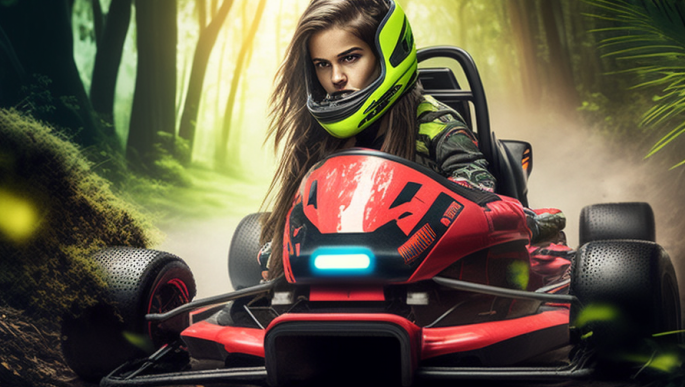

Trailmaster Ultra Mini XRX+ Go Kart Buggy, High Back Seats, Adjustable for Younger Riders, Throttle Limiter and Kill Remote. with Pre-Assembled Version Now! (Plus, Black)
- 212cc, 7hp Engine and features 2-wheel drive and centrifugal clutch
- Bigger Tires, Larger Frame, Live Axle, Two-wheel Drive, Electric Start w/Pull Start Back Up
- LED Headlight, Remote Start/Kill
- Adjustable Sports Seat, Adjustable Pedal, Five Point Safety Seatbelt
- Speed Governor, Horn
$1,549.00

TRAILMASTER Mid XRX/R – Deluxe Go Kart Buggy with Reverse, Full roll cage and Safety Harness, Ages 10 and up, 196 CC Electric Start. (Red)
- Heavy Duty Frame!
- Light Kit Package!
- Dual Seats!
- Cargo Rack!
- Disc Brake
- NOT CA CARB-compliant
$2,735.00

TRAILMASTER MID XRS Mid-Size Go Kart for Older Kids 10 to 14. 196 CC Motor Bench Seat Great Starter Kart (Black)
- EPA Approved Engine Type 4 Stroke – Engine Size 212cc Cooling Type Air Cooled
- Front Tires: Offroad 16 x 6 – 8 / Rear Tires: Offroad 145 x 70
- 6 Suspension: Rear Swingarm Suspension Rear Shock 8.5″ Mono Shocks (2) Seat to Pedal 33″ ( Non Adjustable )
- Height 51.5″ / Width 39.5″ / Length 65″ / Seat Width 28″” Bottom of Seat to Top Frame 37.5″
- Brakes: Disc Brakes Gas Tank: .80 Gallons Kill Switch Starting Method Pull Start
$1,549.00
Adventures Await: Navigating Your Way to the Ideal Off-Road Companion
When I first heard the unmistakable rumble of a go-kart engine echoing through our neighborhood, I knew I had to have one. Not just any go-kart—a Trailmaster. That distinct combination of power and playfulness captured my imagination, and before I knew it, I was diving headfirst into research mode, determined to find the perfect off-road companion.
After countless hours of research, dealer visits, test drives, and conversations with fellow enthusiasts, I’ve compiled everything I’ve learned into this comprehensive guide. Whether you’re a first-time buyer or looking to upgrade your current ride, I hope my journey helps you find the perfect Trailmaster go-kart to create your own adventures.
Understanding the Trailmaster Appeal
The first question you might ask is: “Why Trailmaster?” It’s a fair question, especially with so many brands competing for your attention in the off-road vehicle market. For me, the answer became clear after my first test drive.
Trailmaster has built a reputation on manufacturing robust, reliable go-karts that strike that perfect balance between recreational fun and serious performance capability. What sets them apart isn’t just the quality of their builds—though that’s certainly impressive—but their commitment to creating vehicles that grow with you.
Finding the right Trailmaster go-kart isn’t just about buying a vehicle; it’s about investing in countless future adventures. This philosophy guided my entire search process, and it’s what I hope to share with you through this guide.
Assessing Your Needs: The Foundation of a Smart Purchase
Before diving into specific models and technical specifications, I found it essential to honestly assess what I wanted from my go-karting experience. This self-reflection saved me from the common pitfall of overbuying—purchasing more power or features than I actually needed.
Age and Rider Experience Level
Trailmaster designs vehicles for riders of various ages and experience levels. Their youth models feature reduced power outputs and simplified controls, while adult versions offer greater speed and more complex handling.
When considering which category fits you or your family, remember that it’s not just about chronological age, but about maturity, physical size, and previous driving experience. My nephew, though technically old enough for a mid-range model at 14, started with a youth version to build confidence before graduating to something more powerful.
Intended Use
How you plan to use your go-kart dramatically influences which model would serve you best. Consider:
- Recreational use around the property
- Trail riding through wooded areas
- Light competitive racing
- Family sharing across different skill levels
- Working vehicle for property maintenance
For my family, we needed something versatile enough for both trail exploration and occasional yard work (hauling firewood became surprisingly fun with our go-kart!). This dual-purpose requirement narrowed our options considerably.
Terrain Types
The terrain you’ll regularly navigate plays a crucial role in determining the right model. Different Trailmaster go-karts offer varying ground clearance, suspension systems, and tire types specifically designed for:
- Flat, groomed surfaces
- Grassy fields and rolling hills
- Rocky, rugged trails
- Sandy beaches or dunes
- Muddy, wet conditions
Living in the Pacific Northwest, I needed a model that could handle occasional mud, frequent hills, and the odd fallen tree branch—factors that pushed me toward models with higher clearance and more robust suspension systems.
Trailmaster Model Categories: Breaking Down the Lineup
After determining my needs, I dove into exploring Trailmaster’s model lineup. Their range can be roughly divided into four main categories, each serving different purposes and rider profiles.
Youth Models
Designed specifically for younger riders, these go-karts typically feature:
- Engine sizes between 80cc and 200cc
- Top speeds limited to 20-35 mph
- Simplified controls
- Enhanced safety features
- Adjustable seating to accommodate growth
- Remote kill switches for parental control
Popular models in this category include the Mini XRX, XRS, and MID XRX series. These models provided my young nephews with the perfect introduction to motorized recreation—enough excitement to keep them engaged while maintaining safety as the priority.
Recreation Models
Aimed at casual adult riders or teens looking for moderate performance, these mid-range options offer:
- Engine sizes between 150cc and 300cc
- Top speeds around 35-45 mph
- Balanced suspension systems
- Comfortable seating for longer rides
- Moderate ground clearance
- Basic storage options
The Blazer 150X and 200X models epitomize this category, offering enough power for thrilling experiences without the intensity (or price tag) of performance models. This was initially the category I was most drawn to, thinking it represented the best value.
Performance Models
For experienced riders seeking more intense experiences, these higher-end models feature:
- Engine sizes from 300cc to 400cc+
- Top speeds of 45-60+ mph
- Advanced suspension systems
- Higher ground clearance
- Enhanced braking systems
- Reinforced frames for durability
- More sophisticated transmission options
The Challenger 300X and 400X stand out in this category. My neighbor’s Challenger 300X convinced me that the performance category might be worth the investment—the smile on his face after every ride was testament enough.
Utility Models
These specialized go-karts emphasize functionality alongside recreation:
- Enhanced towing capacity
- Cargo beds or storage solutions
- More robust engines for work applications
- Reinforced frames for heavier loads
- Often feature 2-seat configurations
- Typically include 4-stroke engines for better torque
The Taurus series exemplifies this category, with its impressive bed capacity and workhorse mentality. Ultimately, this was where I landed—the perfect blend of fun and functionality for my specific needs.
Key Technical Specifications: What Really Matters
After identifying which category matched my needs, I needed to understand the technical specifications that would influence my experience. While the sheer number of specs can be overwhelming, I found these to be the most critical factors in my decision-making process.
Engine Type and Displacement
Trailmaster primarily uses four types of engines across their lineup:
- 2-stroke engines: Lighter and more powerful for their size, but require oil mixed with fuel and tend to be louder
- 4-stroke engines: More fuel-efficient, quieter, and generally more reliable with less maintenance
- Electric start engines: Offer convenience, especially in cold weather
- Pull-start engines: Simpler mechanism but require physical effort to start
The displacement (measured in cubic centimeters or cc) directly affects power output. However, I learned that bigger isn’t always better—larger engines consume more fuel and can be challenging for beginners to control.
After testing various options, I found that a 300cc 4-stroke engine with electric start provided the perfect balance of power, efficiency, and convenience for my needs. The smooth power delivery made it manageable even on tricky terrain, while still providing enough punch for exciting acceleration when desired.
Transmission Types
Trailmaster offers several transmission options, each affecting how the go-kart drives:
- Automatic CVT (Continuously Variable Transmission): No gear shifting required, making it ideal for beginners
- Semi-automatic: Offers some gear selection without a clutch, providing a middle ground
- Manual: Full control over gears with a clutch, preferred by experienced riders
- Reverse gear: Available on select models, providing additional maneuverability
As someone who wanted to focus on the trail rather than managing gears, I opted for an automatic CVT. The convenience of not shifting gears allowed me to better appreciate the surrounding scenery and focus on navigating challenging terrain.
Suspension Systems
The suspension system significantly impacts ride comfort and handling capability:
- Independent front suspension: Provides better handling and smoother rides over rough terrain
- Solid axle rear suspension: Offers simplicity and durability
- Adjustable shock absorbers: Allow customization based on rider weight and terrain
- Travel distance: Longer travel generally means better absorption of bumps and drops
After experiencing both basic and advanced suspension systems, I found that independent front suspension with adjustable shocks transformed the riding experience on our local trails. The ability to fine-tune the suspension based on load and terrain type proved invaluable for both comfort and handling.
Braking Systems
Safety being paramount, I paid special attention to braking options:
- Hydraulic disc brakes: Offer superior stopping power and better modulation
- Mechanical disc brakes: Reliable but require more physical input
- Drum brakes: Typically found on entry-level models, less responsive
- Dual braking systems: Independent front and rear brakes for better control
After a particularly hairy moment on a steep decline during a test drive with mechanical brakes, I became a firm believer in hydraulic disc brakes. The confidence they inspire when navigating technical descents is well worth any additional cost.
Frame Construction and Ground Clearance
The frame’s design affects durability, weight distribution, and overall handling:
- Steel tube frames: Common on most models, offering good balance of strength and weight
- Reinforced frames: Featured on performance and utility models for added durability
- Ground clearance: Higher clearance allows navigation over more obstacles
- Wheelbase: Longer wheelbase provides stability, shorter offers maneuverability
Having accidentally bottomed out a low-clearance model during testing, I prioritized models with at least 8 inches of ground clearance for our often-muddy local trails. This single specification has saved us countless times from getting stuck.
Popular Trailmaster Models: A Closer Look
After understanding the technical aspects, I spent time examining the most popular Trailmaster models in each category. Here’s what I discovered through hands-on experience and countless conversations with owners.
Trailmaster Mini XRX
Ideal for: Young beginners (ages 6-10)
Engine: 80cc, 4-stroke
Transmission: Automatic
Key features:
- Adjustable governor to limit speed as skills develop
- Parent remote kill switch
- Small turning radius for easy maneuvering
- Safety harness and roll cage
My younger nephew started with this model, and the adjustable governor proved to be an excellent feature—allowing us to increase power gradually as his skills improved. The remote kill switch gave my sister peace of mind during his learning phase.
Trailmaster Mid XRX
Ideal for: Older children/young teens (ages 10-14)
Engine: 196cc, 4-stroke
Transmission: Automatic with reverse
Key features:
- Higher speed capability (up to 25 mph)
- More substantial suspension
- Larger frame for growing riders
- Full roll cage protection
This “tweener” model bridges the gap between youth and adult go-karts perfectly. My older nephew moved to this after outgrowing his Mini, and the transition was seamless thanks to similar controls but enhanced performance.
Trailmaster Blazer 200X
Ideal for: Teens and adults seeking recreational use
Engine: 196cc, 4-stroke
Transmission: CVT automatic with reverse
Key features:
- Comfortable seating for extended rides
- Robust suspension for trail riding
- Sporty appearance and handling
- Good balance of power and control
This was the first model I seriously considered for myself. During my test drive, I was impressed by its responsive handling and adequate power for recreational trail riding. It represents an excellent entry point for adult riders.
Trailmaster Challenger 300X
Ideal for: Experienced riders seeking performance
Engine: 300cc, 4-stroke
Transmission: CVT automatic with reverse
Key features:
- Enhanced suspension travel
- Higher top speed (45+ mph)
- More aggressive tire pattern
- Reinforced frame for jumping and aggressive riding
My neighbor owns this model, and after borrowing it for a weekend, I almost changed my purchase plans. The additional power and suspension quality transform the riding experience, allowing you to tackle terrain that would challenge lesser models.
Trailmaster Taurus 200G
Ideal for: Utility applications with recreational use
Engine: 196cc, 4-stroke
Transmission: CVT automatic with reverse
Key features:
- Cargo bed with 350 lb capacity
- 2-person seating
- Worksite-ready durability
- Towing capability
This ended up being my choice, as it balanced fun with function perfectly. The cargo bed has proven invaluable for everything from camping gear to firewood collection, while still providing all the recreational enjoyment of a traditional go-kart.
Essential Accessories and Add-ons
While the base model provides everything needed to start your adventures, I quickly discovered that certain accessories significantly enhance the experience and functionality of a Trailmaster go-kart.
Protection and Safety
- Roll cage extensions: Provide additional protection in case of rollovers
- Skid plates: Protect the undercarriage from rocks and obstacles
- LED light kits: Essential for dusk or evening riding
- Side mirrors: Improve visibility, especially on trails with two-way traffic
- Fire extinguisher mount: A safety essential often overlooked
After clipping a hidden stump during an early morning ride, I immediately invested in upgraded skid plates—a decision that has likely saved me expensive repairs multiple times since.
Comfort and Convenience
- Padded seats and harness covers: Make longer rides more comfortable
- Storage solutions: Bags, boxes, or nets to secure personal items
- Windshields: Reduce debris and wind, especially valuable in cooler weather
- Canopies: Provide shade for hot weather riding
- Cup holders: A small addition that makes a surprising difference on longer outings
The windshield I added to my Taurus has transformed our experience during bug season—no more picking insects out of our teeth after a spirited ride through wooded areas!
Performance Enhancements
- Upgraded tires: Different tread patterns for specific terrain types
- Performance air filters: Improve airflow and engine efficiency
- Enhanced shocks: Better absorption of rough terrain
- Exhaust modifications: Can increase power (but also noise)
- Winch kits: Essential for serious trail riders who might encounter challenging situations
While tempting, I’ve been selective about performance modifications, focusing first on tires specific to our local conditions and upgraded shocks for comfort. These two changes alone transformed the riding experience without compromising reliability.
Maintenance and Practicality
- Custom covers: Protect from elements when stored outside
- Maintenance kits: Specialized tools for common adjustments
- Spare parts package: Common replacement items like belts and filters
- Tow hitches: Expand utility functionality
- Hour/RPM meters: Track usage for maintenance scheduling
The maintenance kit has paid for itself many times over by allowing me to handle routine adjustments without dealer visits. I’d consider it an essential purchase for anyone who doesn’t want to be dependent on service centers.
Purchasing Considerations: Where and How to Buy
Armed with knowledge about models and specifications, the next challenge was navigating the purchasing process itself. I explored multiple avenues and learned valuable lessons about where and how to buy a Trailmaster go-kart.
Authorized Dealers vs. Online Retailers
Both options have distinct advantages and drawbacks:
Authorized Dealers:
- Offer test drive opportunities
- Provide assembly and initial setup
- Often include basic warranty service
- May offer financing options
- Can build ongoing relationship for service needs
- Typically higher prices than online options
Online Retailers:
- Generally lower prices
- Wider selection of models and inventory
- Reviews from previous customers available
- Often ship directly to your home
- Require assembly or separate assembly service
- May have more complicated warranty service
I ultimately purchased from an authorized dealer despite the higher cost. The ability to test drive multiple models back-to-back proved invaluable in making the right decision, and the included assembly and initial setup service ensured everything was properly configured from day one.
New vs. Used Considerations
The secondary market for Trailmaster go-karts is quite active, offering potential savings:
New Purchase Benefits:
- Full warranty coverage
- Known vehicle history
- Latest models and features
- Dealer support and service
- No hidden mechanical issues
Used Purchase Considerations:
- Significant cost savings (often 30-50% off new price)
- Previous owner may have added valuable upgrades
- Depreciation has already occurred
- May require immediate maintenance
- Uncertain maintenance history
- Limited or no warranty coverage
I seriously considered a used Challenger 300X that was two years old with low hours, but ultimately opted for new given the peace of mind and full warranty. However, for more budget-conscious buyers, well-maintained used models can represent excellent value.
Seasonal Buying Strategy
Timing your purchase can yield significant savings:
- Fall/Winter: Dealers often offer clearance pricing on current year models
- Spring: New models typically arrive with premium pricing
- End of Month/Quarter: Sales staff may be more motivated to meet quotas
- Major Holidays: Special promotions and sales events are common
By purchasing in late October, I benefited from both end-of-season and end-of-month incentives, saving nearly 15% off the standard pricing. Patience in timing can translate to substantial savings.
Negotiation Tactics
Unlike many retail purchases, go-kart pricing often has room for negotiation:
- Research current pricing across multiple dealers
- Obtain written quotes to leverage against other dealers
- Consider package deals including accessories and maintenance
- Be prepared to walk away if the deal doesn’t meet your requirements
- Consider last year’s models for significant discounts
The most effective negotiation leverage I found was having competitive written quotes and being transparent about them with my preferred dealer. This approach yielded both price concessions and valuable included accessories.
Ownership Costs: Beyond the Purchase Price
As a responsible buyer, I wanted to understand the total cost of ownership beyond the initial purchase price. This forward-thinking approach prevented unpleasant surprises down the road.
Routine Maintenance Expenses
Regular maintenance is essential for reliability and longevity:
- Oil changes: Typically every 10-25 hours of operation ($20-40 each)
- Air filter service: Cleaning or replacement every 10-20 hours ($10-30)
- Drive belt inspection/replacement: Every 50-100 hours ($50-100)
- Tire replacement: As needed based on terrain and riding style ($200-400 per set)
- Brake service: Pad replacement and fluid changes ($50-150)
I budget approximately $300-400 annually for standard maintenance, performing most routine tasks myself. The investment in maintenance tools and knowledge has significantly reduced my long-term costs.
Insurance Considerations
Insurance options vary based on location and usage:
- Homeowner’s policy riders: May cover limited liability while on your property
- Specialized off-road vehicle insurance: Provides more comprehensive coverage
- Typical costs: $100-300 annually depending on coverage levels
- Coverage options: Liability, collision, comprehensive, medical payments
After consulting with my insurance agent, I added a rider to my homeowner’s policy for basic liability coverage on our property, while purchasing specialized off-road insurance for trail riding on public lands.
Storage Requirements
Proper storage protects your investment:
- Covered storage: Essential for preventing weather damage and extending vehicle life
- Space requirements: Typically 6’x10′ minimum area needed
- Climate considerations: Protection from extreme temperatures and humidity
- Security needs: Theft prevention for a valuable and easily transported item
I built a simple 8’x12′ lean-to shelter attached to our garage, providing protected storage while maintaining easy access. The $600 investment will pay dividends in preserved value and reduced maintenance issues.
Transportation Options
Unless used exclusively on your property, transport capabilities matter:
- Trailer requirements: Typically 5’x10′ minimum with ramp
- Truck bed transportation: Possible with larger trucks and loading ramps
- Specialized carriers: Hitch-mounted options for SUVs and larger vehicles
- Associated costs: $500-2,000 for trailer, $100-300 for quality ramps
I invested in a multi-purpose 6’x12′ utility trailer ($1,200) that serves for both go-kart transportation and other household needs, maximizing the value of this additional expense.
Maintenance Basics: Keeping Your Trailmaster Running Smoothly
Developing a maintenance routine immediately after purchase has been key to trouble-free enjoyment of my Trailmaster. Here are the fundamentals I’ve learned, often through trial and error.
Pre-Ride Inspection Routine
Developing a quick pre-ride checklist prevents problems before they start:
- Tire pressure check: Proper inflation affects handling, traction, and tire life
- Fluid level inspection: Oil, coolant (if applicable), brake fluid
- Control function testing: Brakes, steering, throttle response
- Visual inspection: Look for loose components, leaks, or damage
- Belt/chain check: Proper tension and condition
This five-minute routine has prevented numerous potential issues, including a nearly-missed brake fluid leak that could have resulted in a dangerous situation on the trail.
Break-in Period Importance
Properly breaking in a new engine significantly affects its longevity:
- First 5 hours: Vary speed, avoid full throttle, no heavy loads
- Oil change: Complete first oil change at 5 hours regardless of appearance
- Fastener check: Re-torque all accessible fasteners after initial use
- Throttle limit: Some dealers set a break-in throttle limit to be removed later
Following the break-in recommendations meticulously may have seemed excessive initially, but comparing my go-kart’s performance to a friend’s who skipped this process has made me a believer in its importance.
DIY vs. Professional Service
Understanding what you can handle yourself saves money and builds knowledge:
DIY-Friendly Tasks:
- Oil and filter changes
- Air filter maintenance
- Basic adjustments (throttle, brakes, chain/belt)
- Spark plug replacement
- Tire changes
Professional Recommended Services:
- Valve adjustments
- Transmission service
- Complex electrical issues
- Major engine work
- Frame repairs
I’ve found that handling the routine maintenance myself saves approximately 70% over dealer service costs, while building valuable knowledge about how my machine functions.
Winterization Process
Proper storage during off-seasons preserves your investment:
- Fuel system treatment: Add stabilizer or drain system completely
- Battery maintenance: Remove and connect to trickle charger or disconnect
- Thorough cleaning: Remove debris, mud, and moisture
- Lubrication: Apply appropriate lubricants to prevent corrosion
- Elevated storage: Use blocks to keep tires from flat-spotting
- Proper covering: Use breathable covers to prevent moisture trapping
My first winter, I skipped proper winterization and paid the price with carburetor issues and a dead battery in spring. The hour spent properly preparing for storage now saves significant headaches later.
Building Skills: Becoming a Better Rider
Purchasing a Trailmaster was just the beginning of my journey. Developing proper riding skills has been equally important for both enjoyment and safety.
Beginner Techniques
Starting with fundamental skills builds confidence:
- Smooth throttle control: Progressive application rather than on/off movements
- Weight shifting: Using body position to enhance turning and stability
- Braking technique: Proper use of both brakes with appropriate pressure
- Line selection: Choosing optimal paths through obstacles
- Terrain reading: Identifying potential hazards before encountering them
Practicing these basics in a controlled environment before hitting challenging trails prevented many potential mishaps during my early riding days.
Intermediate Skills Development
As confidence grows, more advanced techniques enhance the experience:
- Controlled sliding: Managing power slides around corners
- Obstacle navigation: Properly approaching and crossing challenging terrain
- Hill climbing technique: Weight distribution and throttle management on inclines
- Descent control: Using engine braking and judicious brake application
- Water crossing assessment: Evaluating depth and bottom composition safely
The controlled sliding technique took me weeks to master but transformed my enjoyment of winding trails—turning simple cornering into an exhilarating experience.
Group Riding Etiquette
Most go-karting eventually involves others, requiring social navigation skills:
- Communication signals: Established hand signals for stops, hazards, and directions
- Appropriate spacing: Maintaining safe distances to avoid dust and collision risks
- Skill-appropriate pace: Adjusting group speed to accommodate all riders
- Trail stewardship: Respecting trail conditions and other users
- Emergency protocols: Established procedures for mechanical issues or injuries
Our neighborhood riding group established simple but clear protocols that have enhanced everyone’s enjoyment and prevented misunderstandings during group excursions.
Skill-Building Resources
Numerous resources exist to improve riding capability:
- Online tutorials: YouTube channels dedicated to off-road techniques
- Local clubs: Many areas have go-kart or off-road clubs offering guidance
- Practice courses: Dedicated areas with increasing difficulty challenges
- Experienced mentors: Finding skilled riders willing to share knowledge
- Organized events: Participating in casual non-competitive gatherings
Joining our local off-road club connected me with experienced riders who generously shared their knowledge, accelerating my skill development far beyond what solo practice would have accomplished.
Community and Culture: The Social Side of Go-Karting
One unexpected benefit of Trailmaster ownership has been the social connections formed around this shared interest. The go-kart community has its own distinct culture worth exploring.
Family Bonding Opportunities
Go-karting has strengthened family relationships in ways I never anticipated:
- Shared experiences: Creating memories through adventures together
- Skill transfer: Opportunities for teaching and learning across generations
- Unplugged time: Disconnecting from screens for real-world interaction
- Project collaboration: Working together on maintenance and upgrades
- Healthy competition: Good-natured family rivalries around performance
Teaching my nephews basic maintenance has created mentoring opportunities that extend beyond just go-karting, building confidence they apply in other areas of life.
Online Communities and Resources
Virtual connections supplement in-person relationships:
- Owner forums: Model-specific discussion groups for troubleshooting
- Social media groups: Facebook and other platforms host active communities
- Video channels: Enthusiasts sharing experiences and modifications
- Parts resources: Specialized suppliers for upgrades and replacement parts
- Event coordination: Finding gatherings and organized rides
The Trailmaster Owners Facebook group has been invaluable for specific technical questions, often providing solutions within hours from experienced owners who have encountered similar issues.
Organized Events and Gatherings
Participating in larger go-kart communities enhances the experience:
- Trail rides: Organized group excursions on established routes
- Rally events: Casual gatherings celebrating off-road culture
- Charity rides: Events supporting various causes through participation
- Skills competitions: Non-racing events focusing on technical capabilities
- Swap meets: Opportunities to buy, sell, and trade parts and vehicles
Our annual participation in the local “Dirt for Good” charity ride has connected our recreational interest with community service, adding meaning to our hobby while supporting local youth programs.
Building Your Own Traditions
Creating personal rituals enhances enjoyment:
- Seasonal routes: Special trails reserved for specific times of year
- Milestone celebrations: Marking achievements or anniversaries with special rides
- Photography traditions: Documenting adventures in meaningful locations
- Maintenance gatherings: Making routine upkeep a social event
- Upgrade unveilings: Celebrating new modifications with friends
Our “First Frost Run” has become an anticipated annual tradition, with friends gathering for the first ride after temperatures drop, followed by hot chocolate and storytelling around a fire pit.
Environmental and Legal Considerations
Responsible ownership includes understanding both environmental impact and legal requirements. This aspect of go-karting is often overlooked but critically important.
Environmental Responsibility
Minimizing negative impacts preserves riding opportunities:
- Stay on established trails: Prevent erosion and habitat disruption
- Noise awareness: Respect for wildlife and other outdoor enthusiasts
- Proper waste disposal: Pack out all trash, including maintenance materials
- Invasive species prevention: Clean vehicles between different riding areas
- Wildlife consideration: Respect seasonal closures protecting breeding areas
Our local trails were nearly closed due to irresponsible riders—a situation that motivated our club to develop and promote a trail etiquette program that has successfully preserved access.
Legal Requirements by Region
Regulations vary significantly by location:
- Registration requirements: Many areas require off-road vehicle registration
- Age restrictions: Minimum age requirements for various engine sizes
- Public land usage rules: Where go-karts are permitted or prohibited
- Insurance requirements: Mandatory coverage in some jurisdictions
- Noise regulations: Decibel limits in certain areas
I keep a laminated card with local regulations in our go-kart’s storage compartment, ensuring we always know the specific rules for wherever we’re riding—particularly important when traveling to new areas.
Trail Access and Advocacy
Preserving riding opportunities requires engagement:
- Land use organizations: Groups working to maintain off-road access
- Volunteer opportunities: Trail maintenance and cleanup events
- Responsible representation: Being an ambassador for the activity
- Landowner relationships: Respecting private property and permissions
- Political awareness: Staying informed about proposed regulation changes
Joining our state’s Off-Road Vehicle Association has connected us with broader advocacy efforts, ensuring our recreational interests have representation in policy discussions.
Safety Certifications and Training
Formal education enhances both safety and access:
- Safety certification courses: Available through various organizations
- Youth training programs: Specialized instruction for younger riders
- Advanced skills workshops: Technique improvement for experienced riders
- First aid certification: Preparation for potential emergency situations
- Mechanical workshops: Learning proper maintenance and repair
The ATV Safety Institute course I completed provided valuable techniques that have improved my riding while also qualifying for insurance discounts—a double benefit worth the investment.
Final Thoughts: Making Your Decision
After covering everything from technical specifications to community engagement, I’ve found that the perfect Trailmaster go-kart isn’t just about the vehicle itself—it’s about how it fits into your life, goals, and environment.
Balancing Budget and Features
While it’s tempting to stretch financially for top-tier models, finding the sweet spot requires honesty:
- Consider frequency of use when determining budget
- Factor in all ownership costs beyond purchase price
- Identify must-have features versus nice-to-have options
- Remember that upgrades can be added gradually over time
- Consider long-term value and potential resale
I initially considered a model beyond my budget but ultimately chose a mid-range option with plans for strategic upgrades. This approach provided immediate enjoyment while allowing for personalization as I learned my specific preferences.
The Test Drive Imperative
Nothing replaces hands-on experience:
- Test multiple models back-to-back when possible
- Experience different engine sizes to find your comfort level
- Try various terrain types during testing
- Bring family members who will be using the vehicle
- Pay attention to ergonomics and comfort for your body type
My original online research pointed toward one model, but test driving completely changed my perspective—highlighting the importance of physical experience over specifications alone.
Anticipating Growth and Change
Consider how your needs might evolve:
- Family changes (children growing, new family members)
- Skill development over time
- Potential new usage scenarios
- Property changes or moves
- Health and physical capability evolution
Selecting a model with slightly more capability than my current needs has proven wise as both my skills and usage patterns have expanded beyond what I initially anticipated.
Finding Joy in the Journey
Beyond all practical considerations lies the most important factor—enjoyment:
- Choose what makes you smile, not just what looks good on paper
- Consider the intangible “feel” of different models
- Envision the memories you’ll create
- Remember that perfect technical matches might still lack the right character
- Trust your instincts alongside your research
In the end, the Trailmaster I selected wasn’t the most powerful, the most advanced, or even the most practical on paper—but it was the one that made me grin from ear to ear during the test drive. That visceral reaction has proven to be the most reliable indicator of long-term satisfaction.
Conclusion
The journey to finding your perfect Trailmaster go-kart involves balancing technical requirements, practical considerations, and emotional connection. By thoroughly researching models, understanding your specific needs, considering total ownership costs, and connecting with the broader community, you’ll be well-equipped to make a decision that provides years of adventure and enjoyment.
Remember that finding the right Trailmaster go-kart isn’t just about buying a vehicle; it’s about investing in countless future adventures. The memories created, skills developed, and connections formed around these remarkable machines often far outweigh the initial purchase decision in importance.
Whether you’re seeking family recreation, solo adventures, utility functionality, or competitive thrills, there’s a Trailmaster model perfectly suited to your needs. Take your time, enjoy the research process, and soon enough, you’ll be creating your own go-karting stories to share.